
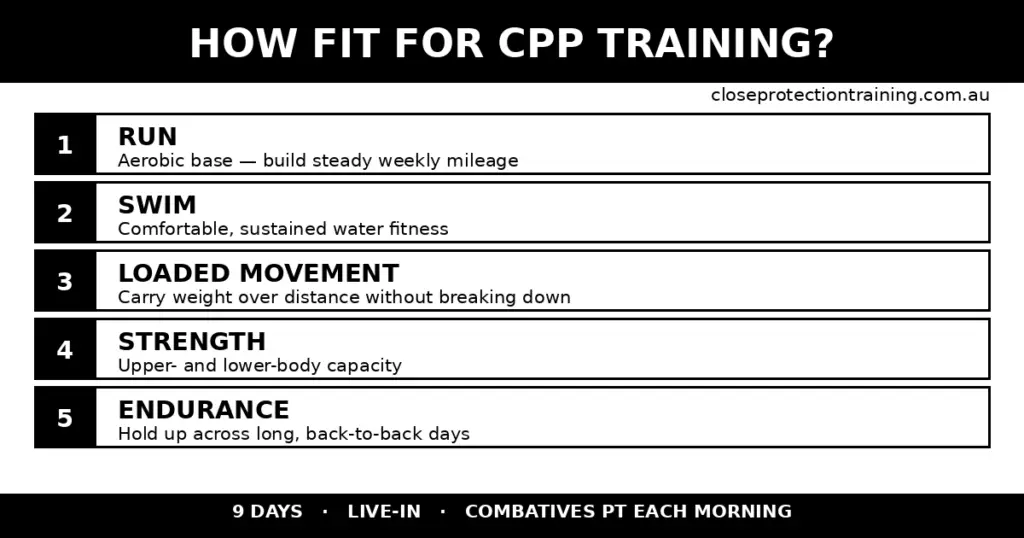
TL;DR: You do not need to be elite to join Panoptic’s 9-day Close Personal Protection (CPP) course. But you do need a solid, all-round fitness base. The days are long. Each one starts with combatives PT. There is a fitness check at the start. It covers running, swimming, carrying loads, and strength and endurance. So arrive fit and ready.
How fit do you need to be for Close Personal Protection (CPP) training?
You need a solid, all-round fitness base. You do not need to be elite. Panoptic’s 9-day live-in CPP course is on the Gold Coast. Each morning starts with combatives PT. The days are long and full of live scenarios. So you should arrive fit. No experience is needed. But the fitter you are, the more you will get from the course.
Is there a minimum fitness standard?
Panoptic does not publish one pass mark. And you do not need experience to enrol. But the course does include a fitness check. It looks at running, swimming, carrying loads, and strength and endurance. These are the things close protection work asks of you. So do not train for one test. Instead, get fit across all of these areas. Want the exact standard for your intake? Contact the Panoptic team before you book. New to all this? Read how to become a CPP operative in Australia.
What is the physical side of the course?
This is not a classroom course. You live on site. The days are long. Each one starts with combatives PT. You then train in protective formations. You handle the principal. You run immediate action drills and low-profile work. These play out as live scenarios across the Gold Coast. You also do a live-fire range (Category H). And you do first aid and trauma care, often while tired. Panoptic is upfront: you will finish each day tired. Good base fitness lets you keep learning, not just cope. Want the full plan? Read what happens during the 9-day CPP course.
How should you get ready?
Build your base over weeks and months. Do not cram in the last two weeks. Run and swim often. This builds your aerobic engine. Add loaded carries and strength work. This gets you ready to move under load. Do regular full-body conditioning too. This builds the endurance for long days. Sleep, rest and good food matter just as much. Weighing up the whole course? See what qualifications you get and what it costs.
Where do CPP graduates work?
Panoptic runs the course on the Gold Coast. Graduates then work across Australia. This includes Sydney, Melbourne, Brisbane, Perth and Adelaide. It also includes the Sunshine Coast, Newcastle, Wollongong, Geelong, Darwin, Katherine and Townsville. There is close protection, bodyguard and dignitary protection work near many defence bases and police hubs.
Key takeaways
- You do not need elite fitness. But you do need a solid all-round base.
- The course has a fitness check: running, swimming, loaded movement, and strength and endurance.
- Each day starts with combatives PT. The days are long and hard.
- Live scenarios run across the Gold Coast. There is also a live-fire range and trauma work.
- Get ready with regular running, swimming, loaded carries and strength work. Ask Panoptic for the current standard.
Ready to test yourself on the next intake? Book your place on the Close Personal Protection (CPP) course.
